Every morning, the person took the same route.
Out the door, down the street, past a small coffee shop on the corner. It had been there for years. The sign was modest. The menu, simple. No loud branding, no flashy offers. And yet, the place was always busy.What changed wasn’t obvious day to day. But over time, small things shifted.
The door handle moved slightly, easier to grab when carrying a bag. The menu board became simpler-fewer words, clearer prices. The counter layout adjusted so people didn’t awkwardly shuffle while waiting for their order. None of these changes were announced. No one talked about them. But the line moved faster. People looked less confused. The space felt easier to be in.No single change made the difference.All of them together did.
That’s iteration.
It doesn’t arrive with drama. It doesn’t demand recognition. Most of the time, people don’t even notice it happening. They only notice how something feels after it’s been shaped by repeated, thoughtful adjustment.
In design, iteration is often misunderstood as repetition-as trying the same thing again and again until it works. In reality, it’s closer to paying attention. Watching how people behave when no one is guiding them. Noticing friction that doesn’t show up in metrics. Making small corrections instead of big declarations.
The hardest part is that iteration rarely feels efficient.
The first version of anything tends to feel complete. It works. It passes checks. It meets requirements. Iteration asks something uncomfortable: to revisit what already “works” and ask whether it could work more naturally.T hat requires patience. It means accepting that people won’t always behave the way a design expects them to. They’ll improvise. They’ll rush. They’ll misunderstand. They’ll use things at the wrong time, in the wrong order, for reasons no one predicted. Iteration treats this not as misuse, but as information.
Over time, something interesting happens.
The product-or space, or system-stops feeling designed. It starts feeling familiar. Movements become instinctive. Decisions feel obvious. The experience doesn’t demand thought. It supports it.
That’s the point where design succeeds.
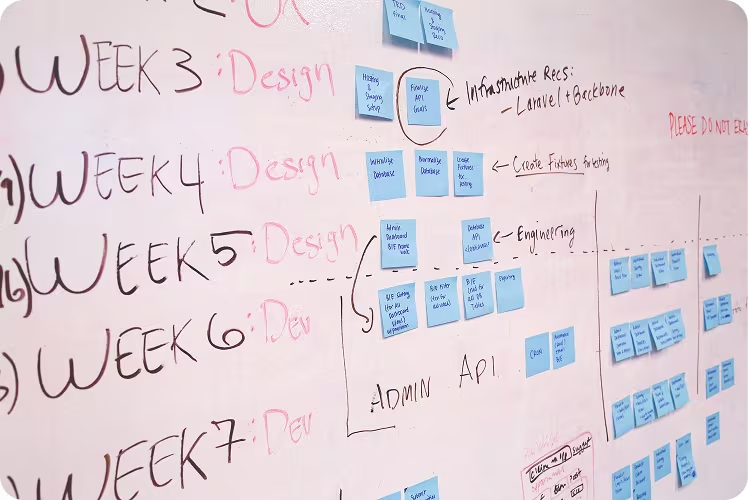
And yet, iteration is rarely celebrated because its results are subtle. There’s no single moment where everything clicks into place. Just a series of small choices that remove friction, one layer at a time.The best experiences in everyday life are often the result of this quiet refinement. Roads that guide traffic without signs everywhere. Apps that don’t need tutorials. Objects that feel right in the hand without explanation. None of these were perfect the first time.
They became better because someone paid attention long after the obvious work was done.
How we do it at Arzen
At Arzen, iteration is treated less as a phase and more as a habit.Products aren’t seen as finished when they’re released. They’re observed. Learned from. Refined. Shaped by how people actually use them, not how they were expected to. Hardware, software, and experience evolve together through small, deliberate improvements that compound over time.
The goal isn’t to constantly change things.
It’s to quietly make them easier.
Because the most meaningful design work doesn’t announce itself.It shows up in moments when people don’t have to stop and think—when something simply fits into their lives, as if it had always been there.